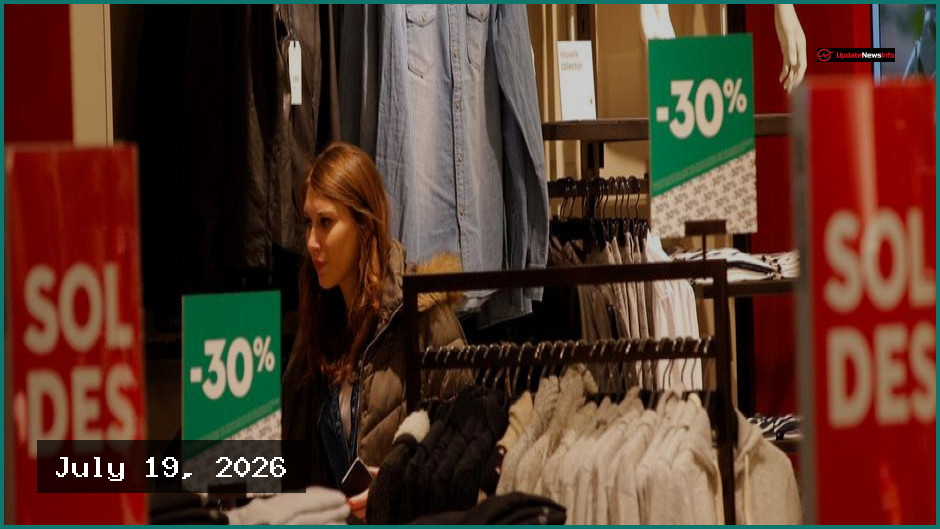
A significant shift in environmental policy has taken effect across the European Union, as new rules now prohibit large corporations from destroying unsold clothing, accessories, and footwear.
This legislative move, part of the EU's Ecodesign for Sustainable Products Regulation, aims to address the vast quantities of fashion goods that end up in landfills or incinerators each year.
Under the new mandate, companies with more than 250 employees and a net annual turnover exceeding €50 million are legally required to find alternative methods for handling excess stock. Acceptable solutions include selling products at discounted rates, utilizing alternative market channels, or donating items to charitable organizations.
Unsold clothes can only be destroyed when items are unsafe, damaged, counterfeit or rejected by charities, according to a post on the European Commission's website.
The regulation also imposes strict transparency requirements, forcing companies to maintain detailed records for five years and publish annual reports regarding the volume and nature of any discarded items. While the rules currently target large entities, there are plans to extend these requirements to medium-sized firms by 2030.
The fashion sector, which produces only 20% of its apparel within the EU, has faced mounting pressure to address its environmental footprint. Data from the European Environment Agency (EEA) indicates that approximately 4% to 9% of unsold textile products are destroyed annually.
Furthermore, one in every five items ordered online in the EU is returned and subsequently not resold.
Combined, this amounts to hundreds of thousands of tons of clothes, accessories and footwear. The EEA emphasized that this legislation is a critical step toward embedding a circular economy into law, where products are designed for longevity, repair, and recycling.
Despite the environmental goals, some industry representatives have expressed concerns regarding the practical implementation of the ban. Stefan Genth, Managing Director of HDE, noted that the regulation presents a substantial challenge for retailers.
He argued that it is not always feasible to resell or donate goods due to factors such as damaged packaging, high logistics costs, low product values, or a simple lack of consumer demand.
Historically, the industry has defended the destruction of stock as a more cost-effective alternative to storage, repair, or discounting. Don't let the algorithm hide the news. If you rely on our team for trusted reporting, please take a moment to select us as your Preferred news source on Google by clicking here, so you'll always see our verified news first.
The regulation, which was approved by Brussels more than two years ago, will be extended to medium-sized firms in 2030.
In a recent LinkedIn post, the EEA said the bloc wanted the textile industry to become more sustainable.