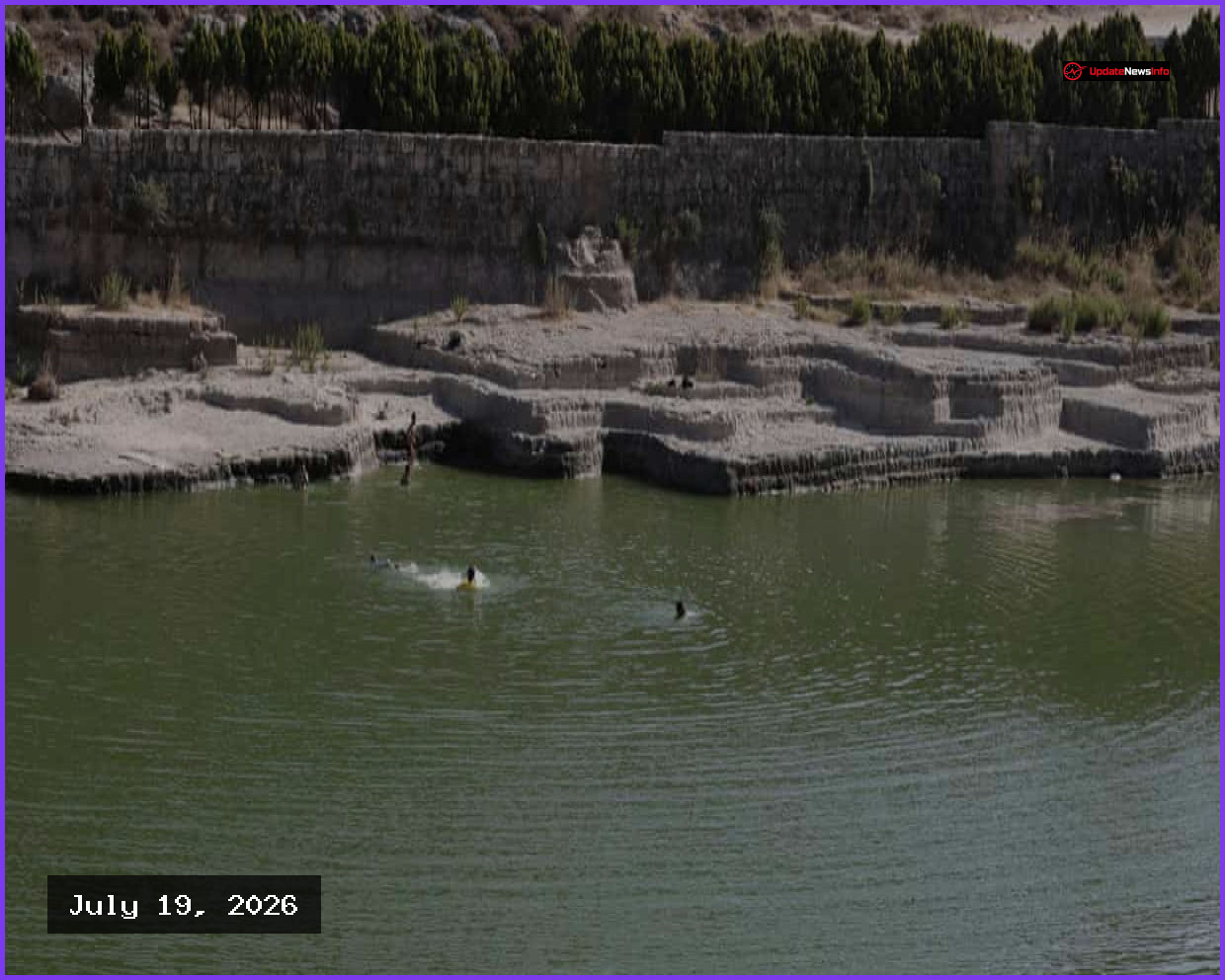
Israel is currently threatening to seize the ancient water reservoirs known as Solomon’s Pools, located near Bethlehem. This potential move marks a significant escalation in the ongoing campaign for control over West Bank territory and the interpretation of the region's historical narrative. The site, which dates back to the second century BCE, has served as a vital water engineering project throughout history, including construction by the Romans and later expansions during the Ottoman and British Mandate periods.
Since May, when Israel’s finance minister, Bezalel Smotrich, explicitly threatened to “erase” agreements confirming Palestinian ownership of the site, Israeli settlers and military forces have increased their presence in the area. The pools, which have a combined capacity of 250,000 cubic metres, are no longer active in supplying water to Jerusalem but have become a crucial recreational space for residents of Bethlehem, particularly those from the villages of Artas and al-Khader. On Fridays and holidays, families come from Bethlehem, 2 miles (3.5km) to the north-east, to spend the evening, bathe and picnic. As the city has become hemmed in by new settlements on all sides, the pools are increasingly a sanctuary for Bethlehemites. Local activist Mahmoud Jaber described the site as one of the few remaining green spaces for families in the area.
The tension intensified in May when Smotrich and politician Zvi Sukkot directed police to clear Palestinians from the pools so they could swim there, declaring it to be Israeli land. On 10 July, Israeli soldiers conducted a raid on the site, firing teargas while local children were swimming. This pressure campaign is viewed by many as a direct challenge to the Palestinian Authority (PA). Under the 1995 second Oslo Accord, the area was classified as Area A, placing it under Palestinian civil and police control. The current Israeli coalition, led by Prime Minister Benjamin Netanyahu, has increasingly challenged such classifications, with Smotrich labeling the inclusion of the site in the Oslo Accords a “terrible mistake.”
Alon Arad, an archaeologist and executive director of the organization Emek Shaveh, warned that the site is being used to undermine the Oslo agreement. He noted that while there are roughly 6,000 ancient sites in the West Bank, only a small fraction are linked specifically to Jewish heritage. While some hardline Israeli voices argue that the site is uniquely Jewish, historians note that the name “Solomon’s Pools” is likely a misnomer, as the pools date to the era of Herod the Great, with the name potentially referring to the Ottoman sultan, Suleiman the Magnificent, who restored water infrastructure in the 16th century.
Eman al-Titi, the head of Bethlehem’s tourism and antiquities department, emphasized that archaeological sites should not be used as tools for political conflict. She expressed concern that the current situation aims to reshape history and ignore the diverse civilizations that have contributed to the region's heritage. As Israel approaches its October elections, local Palestinians and archaeologists remain braced for further incursions. The PA Waqf, the religious endowment which owns the site, had ambitions to develop it for tourism, but those aspirations were crushed when Smotrich withheld the PA’s tax and excise revenues, starving it of funds.
Since Israel’s extremist finance minister, Bezalel Smotrich, made an explicit threat in May to “erase” the agreements that confirmed Palestinian ownership of Solomon’s Pools more than 30 years ago, Israeli settlers and troops have stepped up their presence around the spectacular site.
The pools date back as far as the second century BCE, though the main construction was carried out by the Romans a century later as part of a vast engineering project of two reservoirs, aqueducts and tunnels to supply water to Jerusalem 8 miles (13km) away.