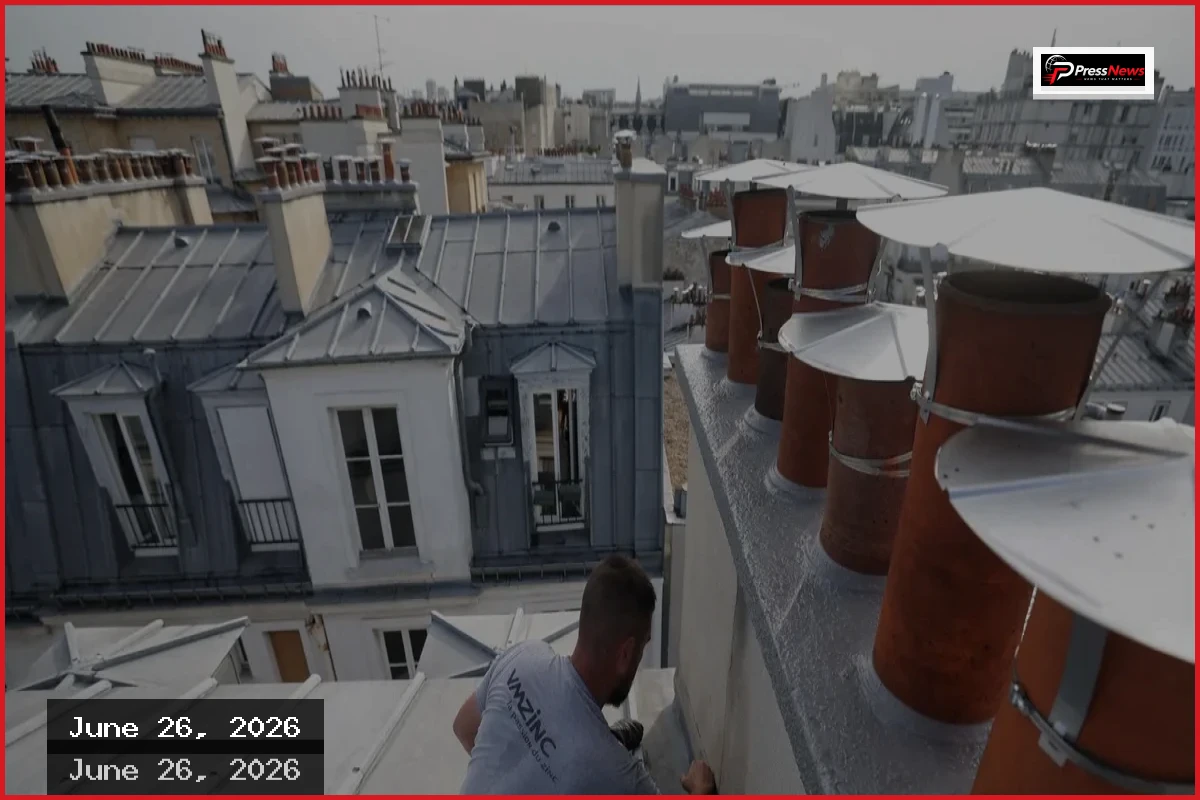
As France endures a severe heatwave, a viral video features a man on a Parisian apartment rooftop successfully cooking a crepe using nothing but the sun’s intensity. The Frenchman, comedian Olivier Giraud, demonstrated how his rooftop became hot enough to fry the pancake by leaving a pan outside for roughly 20 minutes before adding butter and batter.
While the video has a light-hearted tone, it sheds light on a significant issue regarding Paris architecture. The iconic grey zinc rooftops, which adorn the city’s Haussmannian buildings and have existed since the 19th century, make up 78 percent of the city’s roofs as of 2022. These surfaces are notoriously energy-inefficient and pose a safety risk, as they can cause burns if touched during peak summer temperatures.
Paris city hall data indicates that these roofs can reach 80C under direct sunlight on the hottest days. As heatwaves become more intense and frequent, the roofs create a dangerous scenario by radiating heat into the surrounding area and conducting it directly into the apartments beneath them. Residents living in top-floor units can face temperatures up to 6C higher than those in lower units.
Dan Lert, the deputy mayor of Paris responsible for ecological transition, noted in 2024 that individuals living directly under these rooftops face a four-fold increase in mortality risk during heatwaves. Many of these top-floor spaces are small, converted maids’ quarters occupied by students or low-income earners who often cannot afford or structurally accommodate air conditioning.
The future of these rooftops remains a subject of intense debate. Paris officials have suggested modifications like painting the zinc white or installing vegetation, but traditionalists argue to preserve the city’s heritage. In 2015, former mayor Anne Hidalgo opposed granting these roofs UNESCO status to avoid hindering ecological transformations such as solar panel installation. Ultimately, in 2024, UNESCO status was awarded specifically for the specialist craft of the roofers who maintain these structures, rather than the roofs themselves.