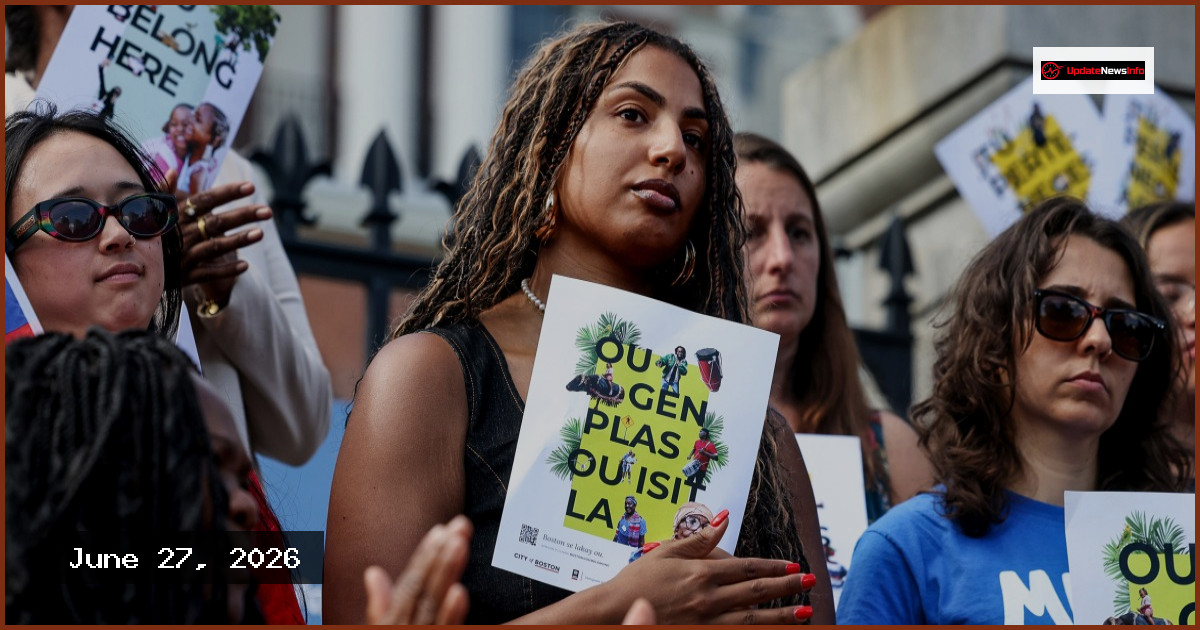
When Harlaine, who has worked as an emergency room and travel nurse since her mid-30s, learned on Thursday morning that the Supreme Court had opened the door for the Trump administration to end immigration protections for Haitians, she felt as though she could no longer breathe. As a recipient of Temporary Protected Status (TPS), a program providing humanitarian relief to people from nations suffering from war, natural disasters, or other catastrophes, she relies on the program to work legally and remain safe from deportation. Some recipients have lived in the U.S. for decades.
Harlaine, who worked on the front lines of the Covid-19 pandemic treating critically ill patients on ventilators, expressed despair over the possibility of losing her work permit and employment. She noted that such actions threaten the livelihoods of those in the U.S. and their families abroad. As President Donald Trump has aimed to terminate TPS protections for immigrants from 17 countries, Thursday’s Supreme Court ruling cleared the way to strip that status from approximately 350,000 Haitians and 6,000 Syrians. The decision has broad implications, potentially affecting more than 1.3 million people from over a dozen countries who could lose their ability to work and become vulnerable to removal.
White House spokesperson Abigail Jackson celebrated the ruling as a significant win for the administration, stating that the Supreme Court affirmed the temporary nature of the program. James Percival, general counsel for the Department of Homeland Security, said the decision vindicates the agency, calling the ruling a win for the rule of law. However, legal experts like Jessica Bansal of the National Day Laborer Organizing Network described the potential loss of status as a tragedy. Melissa Keaney of Muslim Advocates indicated that next steps will depend on case-by-case court challenges. Legal experts also noted the order makes future challenges to TPS termination extremely difficult.
TPS recipients are reeling, terrified of both losing their livelihoods and becoming targets of mass deportation agendas. Viles Dorsainvil, a TPS holder and director at the Haitian Community Help and Support Center in Springfield, Ohio, called it the saddest day of his life in the U.S. The community in Springfield was the target of baseless accusations in 2024 that they were eating pets. Haiti has recently faced a presidential assassination and extreme gang violence, conditions Harlaine describes as unlivable. Harlaine has been a TPS recipient since the program was extended to Haitians following a 2010 earthquake, and she now fears being separated from her 17-month-old U.S. citizen son.
The Supreme Court majority ruled that judges lack the authority to second-guess the administration on ending TPS, rejecting claims of discrimination. Justice Samuel Alito wrote that statements cited by plaintiffs were insufficient to prove the termination was based on race. In her dissent, Justice Elena Kagan criticized the majority for downplaying racial remarks, citing Trump’s 2018 characterization of Haiti as a “shithole country” and comments made during the 2024 campaign. Doris Landaverde, a TPS holder from El Salvador since 1990 who has lived in the U.S. since 2000, faces similar anxiety. With three U.S. citizen children aged 12, 15, and 19, she fears the decision provides the administration more freedom to pursue mass deportations, stating that as hope dies, desperation grows among the immigrant population. Her current protections are set to extend until early September.